TL;DR: In Wix vs Shopify, pick Shopify when selling is the business and Wix when the site is more than a shop. Wix looks cheaper at $29 a month against $39, but its 4% platform fee on Core makes Shopify about $30 a month cheaper at $1,000 in sales. Two differences matter more than price: Wix templates cannot be swapped after publishing without rebuilding the site, and Wix allows 1,000 variants per product against Shopify’s 100.
The actual difference
Both platforms will take an order and charge a card. The difference is what each was built around.
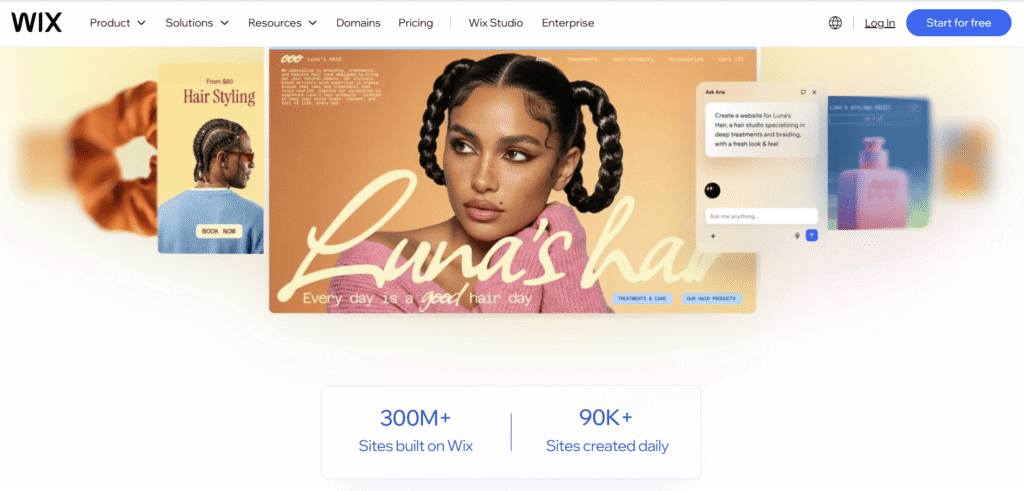
Wix started as a website builder. Commerce was added to it. That heritage shows in what it does well: drag-and-drop design freedom, bookings, events, portfolios, and marketing pages all built in rather than bought as apps.
Shopify started as a store. Everything else was added to it. That shows in inventory handling, multi-channel selling, checkout, and an app ecosystem built specifically for retail problems.
Neither is a general-purpose winner. The question is whether your business is a website that sells, or a store that has a website.
Wix ecommerce pricing against Shopify
| Wix | Shopify | |
|---|---|---|
| Entry ecommerce plan | Core, $29/mo | Basic, $39/mo ($29 annual) |
| Mid tier | Business, $39/mo | Grow, $105/mo ($79 annual) |
| Top standard tier | Business Elite, $159/mo | Advanced, $399/mo ($299 annual) |
| Card processing | 2.9% + 30¢ | 2.9% + 30¢ |
| Platform transaction fee | 4% Core, 2% Business, 0% Business Elite | None on Shopify Payments |
| Third-party gateway surcharge | Not applicable | 2% Basic, 1% Grow, 0.6% Advanced |
| Variants per product | 1,000 | 100 |
| Free plan | Yes, but no selling | No |
| Trial | 14-day money-back | 3 days, then $1/mo for 3 months |
Wix also has a Light plan around $17 a month, but it does not include ecommerce. Core is the cheapest plan that lets you sell.
Two notes on this table.
Wix’s platform fee decides the cost comparison, and most articles get it wrong. Wix markets itself on price, and a great many 2026 reviews state that it charges no platform transaction fee. That is not correct. Core carries 4% and Business carries 2%, on top of the 2.9% + 30¢ payment processing. Only Business Elite at $159 removes it.
Shopify charges no platform fee at all on Shopify Payments. Its 2% applies only if you use a third-party gateway on Basic. So for most merchants the real comparison is Wix’s 4% against Shopify’s zero, which is the opposite of what the plan prices imply.
The template problem nobody mentions
This is the difference that changes most in year two, and it is missing from almost every comparison.
On Wix, you cannot change your template after publishing. Switching to a different design means rebuilding the site. Your content does not flow into a new template the way it does on other platforms.
On Shopify, themes swap in a click. You install a new one, preview it with your real products, and publish when ready. The old theme stays in your library and reverting takes one click.
That asymmetry matters because design decisions made in week one are usually wrong. On Shopify, being wrong costs you an afternoon of reconfiguring. On Wix, it costs you the site.
If you are confident in your design direction and unlikely to rebrand, this is a non-issue. If you are launching to find out what works, it is a real constraint on a platform otherwise marketed for its design freedom.
Where Wix genuinely wins
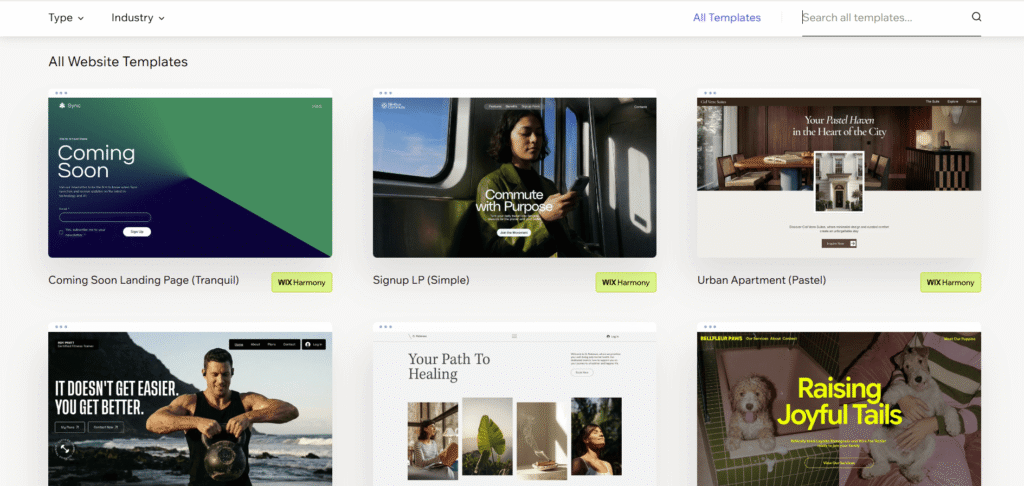
Design freedom without code: Wix’s editor lets you put elements anywhere. Shopify’s theme system is more structured, which produces consistent results and less creative latitude.
Non-commerce features included: Bookings, events, ticketing, portfolios, and membership areas come with the plan. On Shopify most of these are apps at $10 to $40 a month each. For a business that is part service and part product, this is a genuine cost advantage.
A far higher variant ceiling: Wix allows up to 1,000 variants per product, with 6 options per product and 100 choices per option. Shopify caps variants at 100 and no plan removes it. For configurable products this is the strongest argument for Wix anywhere in this comparison.
Cheaper on the sticker price: Core at $29 against Basic at $39, plus a free custom domain for the first year. The platform fee reverses this once you are actually selling, but the entry cost is lower.
Simpler for a beginner: Fewer moving parts and fewer decisions. Many people get a working site live faster on Wix.
Where Shopify pulls ahead
Inventory and catalog depth: Locations, bundles, and stock rules are handled natively. Both platforms support up to 50,000 products, so raw count is not the differentiator. Note the exception: Wix beats Shopify outright on variants, 1,000 against 100.
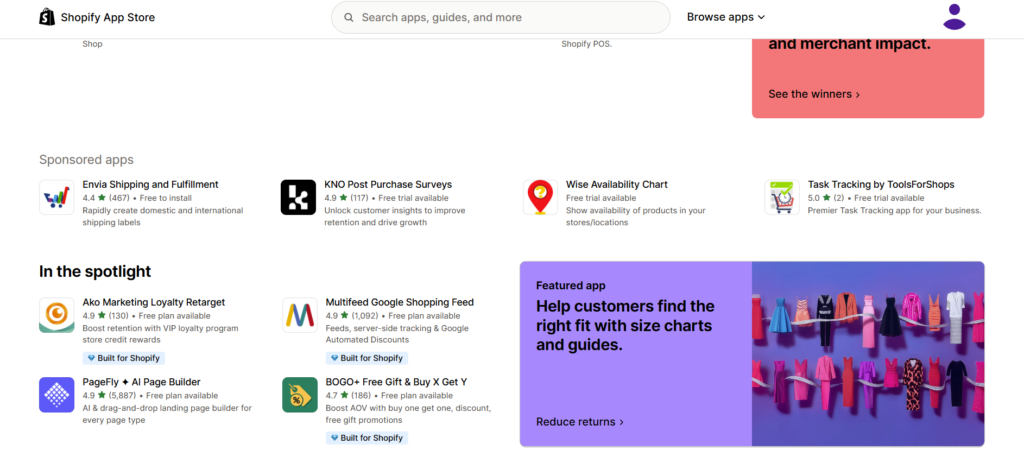
The app ecosystem: Anything a store needs, someone has built it for Shopify. Wix’s marketplace is smaller and thinner in retail-specific tooling.
Checkout: Shopify’s is tested against enormous volume and converts well out of the box.
Multi-channel selling: Selling into marketplaces, social, and now AI assistants. Shopify’s Agentic Storefronts have syndicated catalogs to ChatGPT, Google AI Mode, Microsoft Copilot, Perplexity, and the Shop app since March 2026, included on paid plans. Wix has no equivalent.
Scaling headroom: Shopify goes to Plus. Wix’s ceiling arrives sooner and there is nowhere further to go inside the platform.
The caps that decide it for dropshippers
If you are dropshipping, this section is the whole comparison, and no general review covers it.
Wix’s dropshipping runs through a built-in integration, and reports indicate it carries product limits by plan, with the highest limits reserved for Business Elite at $159 a month. Wix does not publish these caps in one place, so check the current limit for your plan before importing a catalog.
Reports also describe a monthly cap on automated sales tax calculations on Business and Business Elite, set by transaction count. Confirm it with Wix if your order volume is high.
Shopify imposes neither limit. Supplier apps handle unlimited products on any plan, and tax calculation is not metered.
The practical effect is that a large imported catalog pushes you toward Wix’s $159 tier, which is also the only tier where its platform transaction fee disappears. Those two things point the same way: Wix’s real price for a serious dropshipping operation is $159, not $29.
Is Wix better than Shopify? It depends on one question
Wix is better than Shopify when the site would still be useful with the shop removed, and Shopify is better when selling is the whole point.
To apply it, ask yourself what the site would be if you removed the shop.
If something meaningful remains, such as a portfolio, a booking system, a content operation, or a service business, then Wix is probably right. You are buying a website with commerce attached, and Wix does the website part better and cheaper.
If nothing remains, meaning the site exists to sell products and nothing else, then Shopify is probably right. You are buying a store, and every dollar of Wix’s included website features is spent on capability you will not use.
That framing settles most cases faster than any feature table.
Real cost at three revenue levels
At $1,000 a month in sales, Wix Core costs about $107 all-in against about $77 for Shopify Basic, once processing and Wix’s 4% platform fee are counted.
Plan prices mislead badly here, because Wix’s platform fee is charged on revenue while Shopify’s plan is flat. Here is what each actually costs, assuming each platform’s own payment processor.
At $1,000/month across 30 orders. Wix Core: $29 plan, $38 processing, and $40 in platform fee, so $107. Shopify Basic: $39 plan and $38 processing, so $77. Shopify is $30 cheaper, at exactly the stage where every comparison article says Wix wins.
At $5,000/month across 100 orders. Wix Business: $39 plan, $175 processing, $100 platform fee, and say $20 of apps, so $334. Shopify Basic: $39 plan, $175 processing, and $115 of apps, so $329. Effectively level, with Wix’s fee canceling out Shopify’s heavier app stack.
At $20,000/month across 300 orders. Wix Business Elite: $159 plan, $670 processing, no platform fee, plus apps, so around $889. Shopify Basic: $39 plan, $670 processing, and $150 of apps, so $859. Level again.
| Monthly sales | Wix all-in | Shopify all-in |
|---|---|---|
| $1,000 | $107 | $77 |
| $5,000 | $334 | $329 |
| $20,000 | $889 | $859 |
The pattern is the opposite of the received wisdom. Wix is most expensive relative to Shopify when you are small, because the 4% on Core lands hardest before you have volume to dilute it. The two converge as you grow, and by the time Wix’s fee disappears at Business Elite you are paying $159 for the privilege.
Wix’s price advantage is real only before you make a sale. After that it is a fee on revenue.
Shopify vs Wix for switching later
Worth thinking about before you pick, because the exit costs differ.
Leaving either platform means rebuilding the storefront, remapping URLs, and losing your reviews. That part is symmetrical.
What is not symmetrical is how often you might want to. Wix’s ceiling arrives sooner for a growing store, so the probability of needing to migrate is higher. Shopify’s ceiling is high enough that most stores never reach it.
If you expect to stay small, that asymmetry does not matter. If you expect to grow, starting on the platform with more headroom avoids a migration you would otherwise pay for later.
Wix vs Shopify Reddit consensus, and what it misses
Threads on this comparison lean toward Shopify for anything described as a real store, and toward Wix for people who mention a service business, a portfolio, or a small product line alongside other work.
The recurring complaint about Wix is the template lock-in. The recurring complaint about Shopify is app costs, which several people describe as exceeding the plan fee within months.
Both complaints are accurate. What the threads usually miss is that they are complaints about different stages. Template lock-in bites when you want to rebrand, typically in year two. App creep bites when you start optimizing, typically after you have traction. Neither is a reason to avoid a platform, but knowing which one is coming helps.
SEO and content: the quiet Wix vs Shopify difference
Both platforms handle the basics competently now, so the old “Wix is bad for SEO” line is out of date. The difference is structural rather than technical.
Wix includes a real blog and full page-building freedom, which suits a business whose traffic comes from content. You can build landing pages, guides, and resource sections without buying anything.
Shopify’s blog is weaker. Many stores that take content seriously end up running WordPress alongside Shopify, or paying for a page builder app. That is an extra cost and an extra system.
The counterweight is product-page SEO, where Shopify’s structured data, collection handling, and URL conventions are built around retail from the ground up.
The practical read: if your growth plan is organic content, Wix removes friction Shopify charges for. If your growth plan is paid traffic to product pages, that advantage disappears and Shopify’s retail structure matters more.
Worth knowing either way: content takes six months or more to produce meaningful traffic on either platform, so this factor should not decide a launch you want live this month.
Support, and what happens when something breaks
Rarely compared, and it matters at the worst possible moment.
Shopify offers 24/7 support across all paid plans. Wix reserves its fastest support for Business Elite at $159, with slower channels below that.
Neither will fix your theme for you. What you are buying is how quickly someone answers when checkout stops working on a Saturday.
If you are technically confident, this is worth little. If you are running the store alone and would not know where to start with a broken checkout, it is worth more than a $10 monthly price difference.
Which is better for Wix vs Shopify beginners?
Wix is better for beginners who are new to websites entirely, and Shopify is better for beginners who already sell or are comfortable with software.
It is genuinely close, and the kind of beginner you are decides it.
New to websites entirely: Wix. The editor is more forgiving, more is included, and you will have something live sooner. The template lock-in is a future problem, not a launch problem.
New to selling but comfortable with software: Shopify. The learning curve is slightly steeper and the structure teaches you how retail operations are supposed to work, which pays back later.
Coming from a marketplace like Etsy or eBay: Shopify. You already understand catalogs, orders, and shipping. What you need is depth, not hand-holding, and the migration guides are better documented.
One thing that helps either way: build the whole store before you decide. Both platforms let you build without publishing, and Shopify’s 3-day trial plus $1 a month for three months costs about $3 to find out properly. Comparing two live builds beats comparing two review articles.
Payments and selling internationally
This is where a decision that looks like a tie stops being one, and it depends entirely on where you are.
Shopify Payments is not available everywhere. Where it is, Shopify charges no platform transaction fee, so each sale costs only the 2.9% + 30¢ processing. Where it is not, you use a third-party gateway and Shopify adds 2% on Basic, 1% on Grow, and 0.6% on Advanced, on top of whatever your processor charges.
That surcharge is not trivial. On $5,000 a month it is $100, which is more than double the Basic plan fee. Anyone in a country without Shopify Payments should price the whole comparison around this single line.
Wix’s own platform fee complicates this. Wix has no gateway surcharge, but it charges 4% on Core and 2% on Business regardless of processor. So for a Core-plan seller outside Shopify Payments coverage, the comparison is Wix’s 4% against Shopify’s 2% surcharge, and Shopify is still ahead. Wix only wins this argument on Business Elite, where its fee drops to zero.
Wix vs Shopify for cross-border selling
Beyond fees, selling across borders splits differently. Shopify handles multi-currency, market-specific pricing, and duties calculation through its markets tooling. Wix supports multiple currencies but with less control over per-market pricing and tax handling.
So the international picture is less favorable to Wix than it first appears. Shopify’s surcharge only applies where Shopify Payments is unavailable, while Wix’s platform fee applies everywhere below its top tier.
The practical test: check whether Shopify Payments covers your country before you compare anything else. If it does, Shopify carries no percentage fee at all and Wix carries 4% or 2%, which settles the cost question. If it does not, compare Shopify’s 2% surcharge against Wix’s own 4% on Core, and note that Shopify is usually still the cheaper of the two.
One more thing worth checking in your own market. Local payment methods matter more than most comparisons admit, and coverage differs by platform and country. A checkout missing the method your customers expect costs more than any monthly fee.
The short version
Pick Wix if the site is more than a shop, if design freedom matters more than retail depth, or if your products need more than 100 variants, which is a hard Shopify limit that no plan removes.
Pick Shopify if selling is the business, if your catalog is large or complex, if you are dropshipping at any real scale, or if you expect to grow past what a website builder handles.
Do not pick on entry price. The $10 monthly gap in Wix’s favor reverses once its 4% platform fee applies. At $1,000 a month in sales, Shopify is already $30 cheaper.
Our Shopify pricing guide covers what the plans really cost once apps and processing are counted, and the Shopify alternatives article puts both of these against the wider field.
FAQ
Choosing questions
- Is Wix better than Shopify for ecommerce?
Only when the website matters as much as the shop, as with small catalogs and service businesses. For stores where selling is the whole business, Shopify’s retail depth wins within a year. The one clear exception is configurable products, where Wix’s 1,000-variant ceiling beats Shopify’s 100.
2. Which is cheaper?
Shopify, in most real cases. Wix’s $29 plan looks cheaper than Shopify’s $39, but Wix adds a 4% platform fee on Core and 2% on Business that Shopify does not charge on Shopify Payments. At $1,000 a month in sales Shopify works out about $30 cheaper, and the two stay level from there.
3. Can I switch from Wix to Shopify later?
Yes, but it is a rebuild. Products export, design does not, and you will need to redirect every URL to keep your rankings.
Feature questions
4. Does Wix charge transaction fees?
Yes. 4% on Core, 2% on Business, and 0% on Business Elite, charged on top of the 2.9% + 30¢ payment processing. Many published comparisons state that Wix charges nothing, and they are wrong.
5. Can I change my Wix template later?
Not without rebuilding the site. This is the most common regret reported by Wix store owners and the sharpest practical difference from Shopify, where themes swap freely.
6. Which is better for dropshipping?
Shopify, in most cases. Wix’s platform fee and its reported dropshipping product caps both push a serious catalog toward the $159 Business Elite tier, where Shopify handles the same catalog on a $39 plan.
7. Does the Wix vs Shopify answer change if I sell outside the US?
Only a little. Shopify adds 2% on Basic where Shopify Payments is unavailable, but Wix charges 4% on Core everywhere. Check coverage for your country, then compare the two percentages rather than the two plan prices.
I’m building EasyCommerce Club to be the ecommerce resource I wish I’d had starting out, plain-language guides, essential information.
Leave a Reply